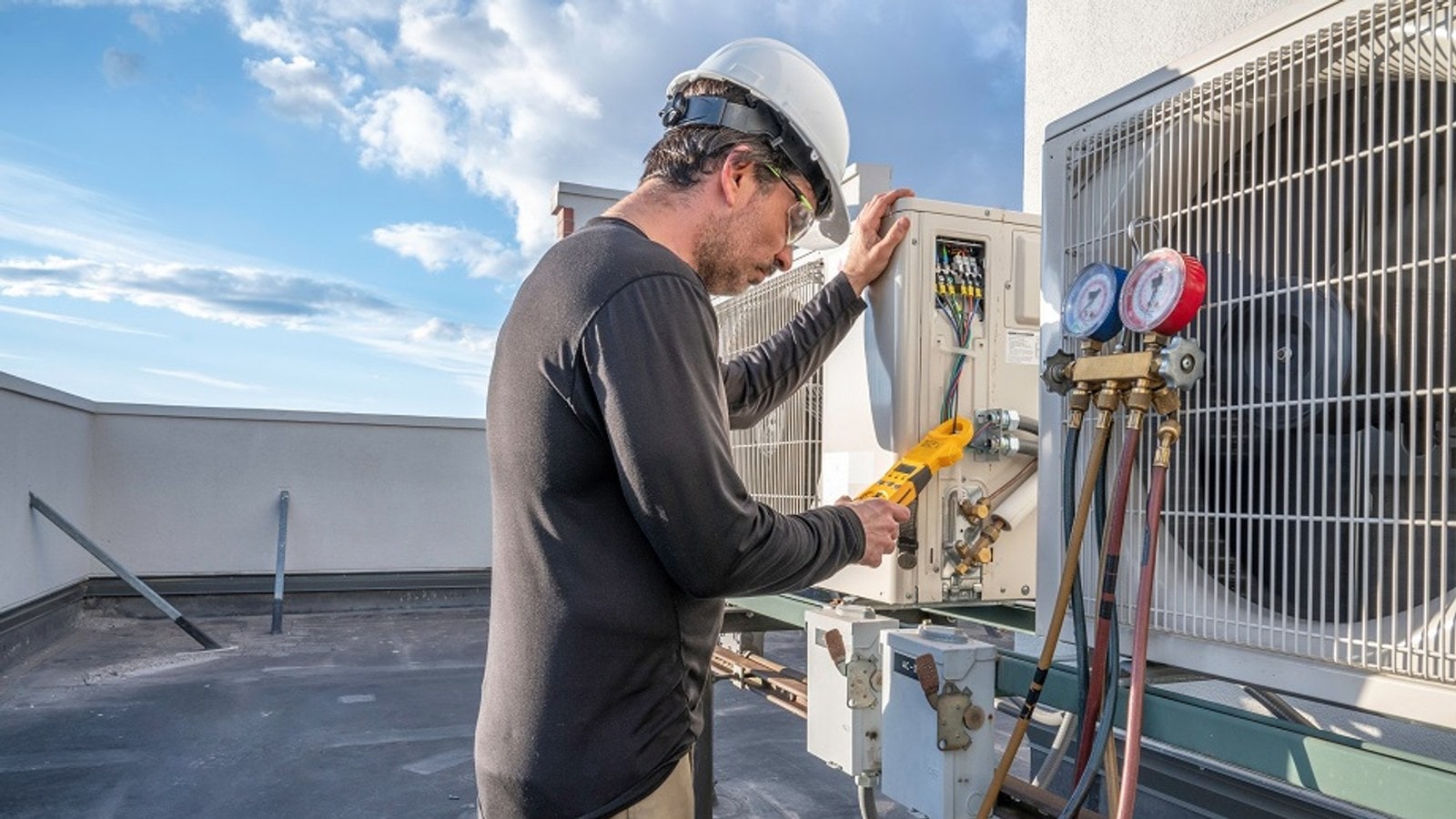
Picture a refrigeration tech standing in front of a commercial cooler that isn’t working. Instead of calling the manufacturer, he pulls out his phone and asks an AI tool what could be wrong. Thirty seconds later he has a troubleshooting recommendation.
What happens if that answer is wrong? AI can explain how equipment works, help locate technical information and suggest possible causes of a failure. What it can’t guarantee is that its answer fits the exact equipment, model and configuration in front of the tech. That is the worry behind a recent ACHR News column by a Heatcraft engineer.
For a shop owner, the useful question isn’t whether techs should be allowed to use AI. It’s which answers have to be independently verified before anybody touches the equipment.
The column, “Using AI to Troubleshoot Refrigeration Systems,” ran Nov. 14 in ACHR News’ FROSTlines series. The author is Joe Marchese, a senior field support engineer at Heatcraft Refrigeration Products, a refrigeration equipment maker. He writes that AI-powered search tools are being used more each day by technicians, in place of calling a manufacturer, a wholesaler or a fellow tech, or digging through a personal library of reference material.
Like this? Get it in your inbox every week.
What changed in home services this week, and what it means for your shop.
No spam. Unsubscribe anytime.
You’re in. Check your inbox (and drag us to Primary). 🔑
His warning is that accuracy is “a major disadvantage.” An answer may be wrong, or may not apply to the actual system or component the tech is working on. He says that could lead to a misdiagnosis, a wrongly adjusted component setting, or the wrong part on a repair. His fix is to check against the manufacturer’s manual or call the manufacturer, a wholesaler or a fellow tech. AI, he concludes, should supplement manufacturer documentation, technical support and a tech’s training, not replace them.
What the column does and doesn’t show
It is an expert’s opinion, not a study. It cites no accuracy testing, names no AI tool and describes no real case of a bad answer causing a callback. Its one demonstration is a conceptual question about what an accumulator does, and it doesn’t say the reply was graded. Marchese says AI search engines are “becoming smarter each day” but offers no data, the page promotes ACHR News’ own AI search tool, and the column covers commercial refrigeration only, so how far it carries into residential HVAC, plumbing or electrical work is up to the reader.
A shop policy for AI answers
This is Digital Insider’s analysis, built from the column’s list of tasks and harms. Marchese doesn’t propose a shop policy, and the tiers on fault codes, wiring and safety go further than his column does.
- Fine as a starting point: explaining how a component works, pointing to where documentation lives, organizing job notes into a work-order report, and drafting troubleshooting checklists that a qualified tech reviews. The first two mirror what the column describes. In every case the answer is a lead, not a conclusion.
- Verify before acting: diagnoses, part numbers, equipment specs, control settings, fault-code interpretations and wiring information. Each must be checked against the correct manufacturer’s documentation for that exact model, through the manual, manufacturer support, a wholesaler or a senior tech. Part lookup is the gray area. AI can point toward a part, but an AI-supplied number or diagram may describe a different model or revision, which is the “does not pertain to the actual system” problem the column describes.
- Never rely on AI alone: safety-critical work involving electricity, pressurized refrigerants, flammable refrigerants or protective controls. That work calls for approved procedures, appropriate qualifications and competent technical supervision.
What one wrong part could cost
The column describes harms but puts no dollar figure on them, so here is a hypothetical, not a documented case. A tech relies on an AI part recommendation that turns out to be wrong for the model. The shop orders a $350 component, sends the tech back to the customer, and spends another three hours sorting it out.
That is $350 in parts plus three hours of tech time at your own loaded labor cost. It leaves out the second trip, any hassle returning the part, the schedule slot the job took from a paying customer and an unhappy homeowner or facility manager. Nothing here says AI caused a documented loss. It shows that an unverified technical answer has an operating cost when it’s wrong.
Putting the check on the ticket
A rule nobody records tends not to get followed. One low-effort version is a required field on any ticket where an AI answer informed a diagnosis, setting or part: “Confirmed against,” with choices for manufacturer manual, manufacturer support, senior tech, or not needed. If a callback or equipment problem follows, it also shows what was checked and what wasn’t.
The tool matters too. ACHR News quoted a METUS executive saying manufacturers are “tiptoeing into it” with internally trained AI for consistent answers, and reported that METUS has loaded its manuals and technical data into AI for its customer service reps. That is a company’s claim, and no independent test here shows whether such tools beat a general chatbot. Still, an answer grounded in a manufacturer’s own manuals is a different thing from a general AI search, and a shop policy can treat them differently.
The column says nothing about warranty. Owners worried about a repair made on an unverified answer should read their own manufacturers’ warranty terms for what they require of repairs and parts. Those terms vary by manufacturer, and nothing in the column suggests any of them address AI.
Related coverage
Sources
- ACHR News, "Using AI to Troubleshoot Refrigeration Systems" (Joe Marchese, Nov. 14, 2026)
- ACHR News, "The Next Generation of VRF Is Here"
More on this topic: AI & Automation coverage